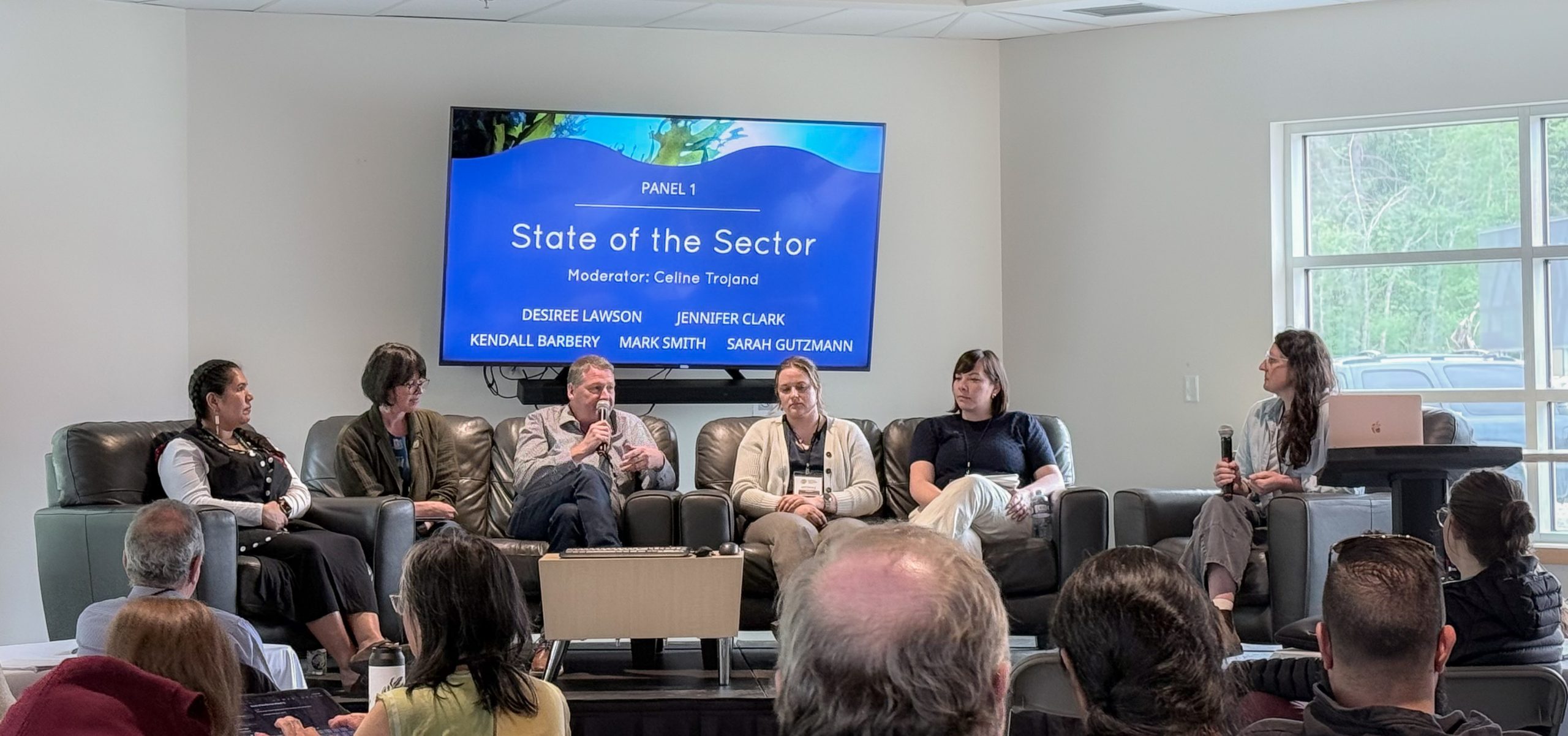
After a year and a half, my first full day back to work from maternity leave was spent at the Pacific Seaweed Summit in Campbell River. Honestly? Public speaking in front of 150 people on the very first panel was a pretty intense way to ease back into work — but also a joyful one. There’s something energizing about being surrounded by a whole room of people who are deeply passionate about the same thing: seaweed.
And the seaweed sector has grown.
When we first stepped into this space six years ago, there were far fewer people involved. Now, the number of players across the value chain has expanded — growers, processors, researchers, community organizers, policy folks, product developers. The sector is learning and evolving in real time.
Our role has evolved, too.
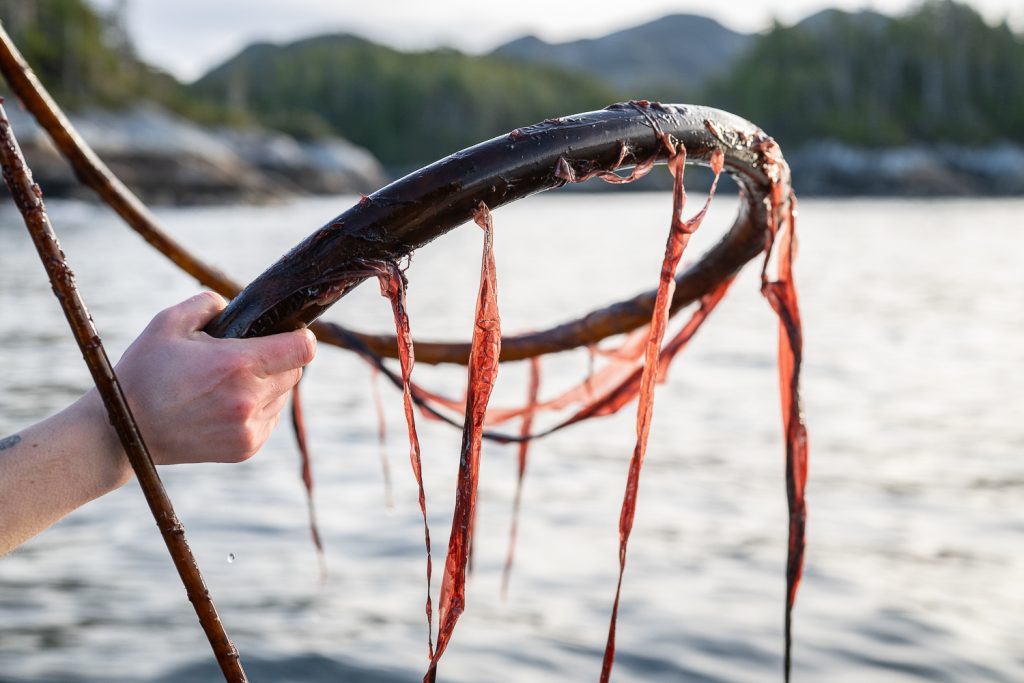
Back in 2020, we were directly supporting on-the-ground work as communities explored what seaweed development could look like for them. We walked alongside Metlakatla First Nation as it pivoted its operations from a large-scale scallop operation and invested in seaweed. That pivot has led to Metlakatla leading the way in cultivating pyropia — also called La’ask, Black seaweed, Nori or Gim — a culturally important, delicious, and nutritious seaweed. Several years ago, no one was working on pyropia, and now regular coastwide pyropia meetings bring together almost 60 people, with 20–25 gathered in one room at the Seaweed Summit, on May 8 alone.
However, as energizing as the event was, I was struck by how familiar it felt to five years ago, and that gives me pause.
There’s still a tendency in some corners to talk about seaweed like it’s a silver bullet — a climate saviour, an economic saviour, an untapped commodity just waiting to explode. And while there is real opportunity here, I worry about the false hope this can create for farmers and communities entering the sector. Scale is still a major challenge, and if the goal is solely to make piles of profit, the reality remains complicated.
The North American market for seaweed is still young, and many of the opportunities often highlighted are much smaller than they appear. For example, one small farm in Quebec is the exclusive supplier to one of the world’s largest cosmetic companies but makes the majority of their revenue from farm tours rather than selling their actual product. Perhaps dreams of landing such exclusive purchasing agreements are not as lucrative as hoped?
Export markets can require a scale of production that may not be environmentally sustainable — or welcomed by coastal communities — and the policy environment is still emerging. Despite a small group of dedicated and brilliant people working hard within government, there are still limited opportunities to meaningfully engage in, or co-create, regulations and legislation specific to seaweed. Much of it still feels ad hoc.
Building a healthy sector will likely require many players to experiment, learn, and gradually grow demand together, yet much of the available investment continues to flow toward speculation and big promises rather than smaller, community-rooted companies doing the practical work of building a resilient industry. Seaweed has potential, but it may look less like a resource boom and more like steady, relationship-based growth that communities actually want.
What feels exciting is the growing maturity of the conversation. More people are asking harder questions: Who benefits? What does community-led development actually mean? How do we build a sector rooted in relationships, reciprocity, Indigenous authority, and long-term resilience rather than hype or extraction?
That’s where our work increasingly sits.
With years of on-the-ground experience and relationship building behind us, we’re moving into a role that feels very familiar to Ecotrust Canada — what the seaweed sector often calls “ecosystem supports.” We hold space for and convene around governance, and we support monitoring programs, training, education, engagement, and policy development. At the Pacific Seaweed Summit, that meant facilitating conversations, moderating panels, supporting collaboration, and helping create spaces where communities can think together about the future they actually want.
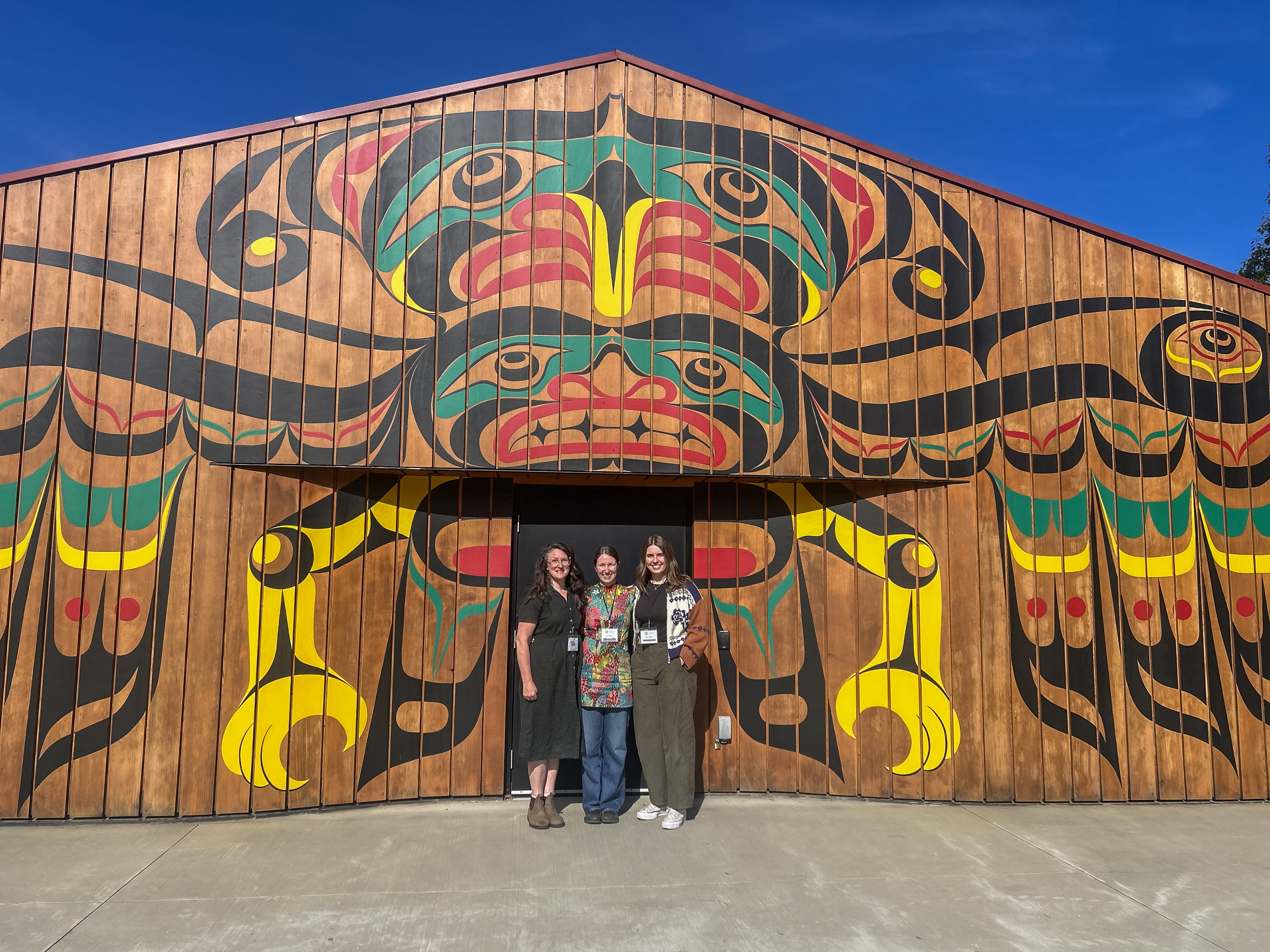
At the summit, I was joined by Mary, our Assistant Director in Food Systems, who was part of the program committee, and Jenn, our Director of Programs and Impact. All three of us supported different pieces throughout the summit. One highlight for us was supporting planning committee member Rhianna Nagel in facilitating the workshop “Seaweed is a Community.” The workshop focused on the seaweed sector’s shared values: what kind of sector we want to build, how we show up for each other, and what it looks like to turn those values into action.
Because at the end of the day, seaweed isn’t just a product. It’s relationships. It’s governance. It’s food systems. It’s culture. It’s community.
That feels like the most promising part of the sector right now.