
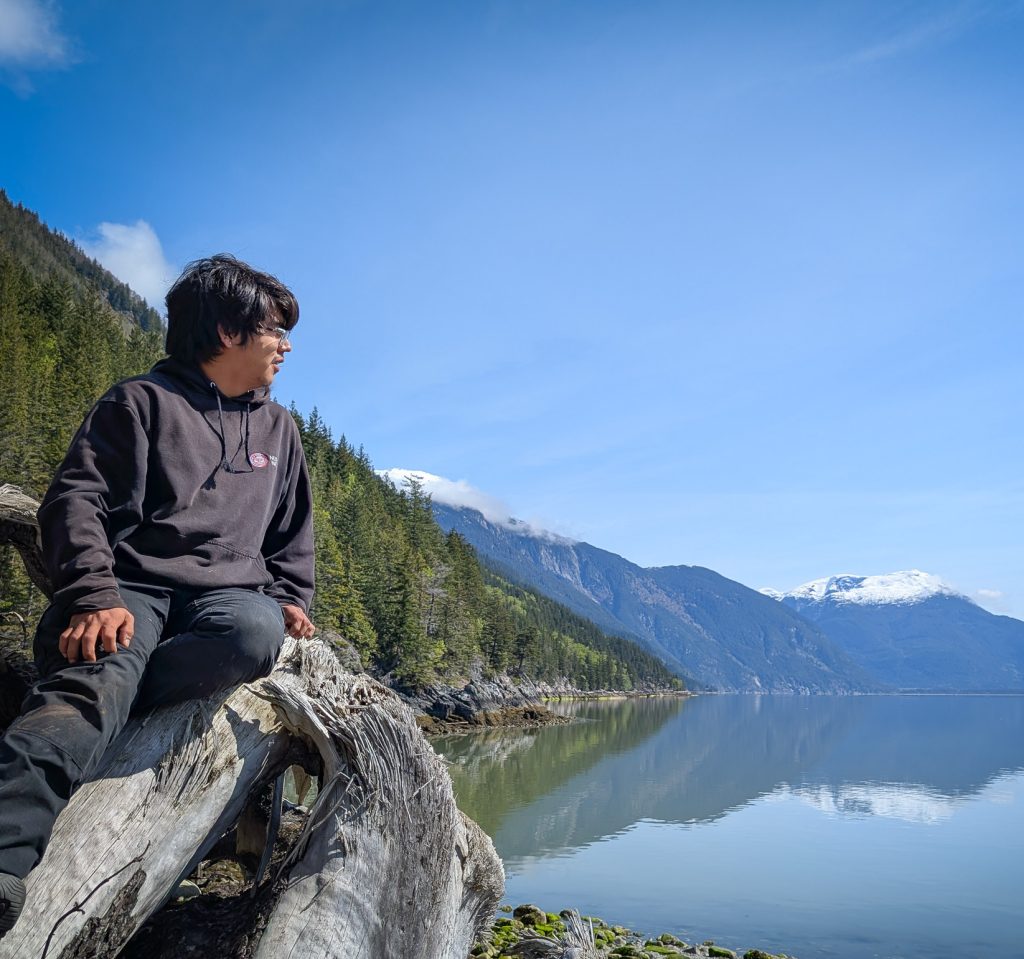
Real work, on the ground and at sea, that’s what is on the agenda for our team this year. Read about how our five programs — Community Fisheries, Climate Resilience, Food Systems, Indigenous Homelands, and Community Energy — are advancing practical, economic solutions with rural, remote, and Indigenous communities.

Community Fisheries
We envision fishing families earning a living, young people finding meaningful work, and thriving small-boat fisheries led by First Nations and coastal communities — ensuring marine resources remain healthy for generations to come.
In 2026, our community-based monitoring programs will support more than 850 fish harvesters in British Columbia. Our data collection services inform sustainable management while creating career opportunities for more than 25 people from the region who know their waters best.
We are working with fishermen, First Nations, fisheries groups, entrepreneurs, and researchers to move toward a made-in-BC licence regime that allows the benefits of fisheries to flow to fish harvesters, First Nations, and coastal communities. On the West Coast, the current licensing regime allows corporations and investors to own and profit from licences and quota they’ll never fish themselves, while harvesters, First Nations and coastal communities — the people who actually work these waters — are squeezed out.
We’ll bring what we learn from harvesters, First Nations, and industry groups to Fisheries and Oceans Canada as the federal government conducts engagement sessions under the West Coast Commercial Fisheries Modernization initiative.
Illegal fishing hurts legitimate harvesters everywhere. Our Spyglass database will soon hold over 10,500 records of criminal fishing activity. Meanwhile, our Principal Investigator, Dyhia Belhabib, will train dozens of enforcement officers worldwide to use tools that make these crimes harder to hide. In 2026, she’ll research possible links between human trafficking and the world’s largest fishing companies.

Climate Resilience
Rural, remote, and Indigenous communities are leading natural climate solutions, stewarding their lands and waters to deliver benefits for climate and biodiversity. We support this leadership by ensuring communities have the data, tools, and resources they need on their own terms.
In 2026, we’ll offer Indigenous communities across Canada territorial-level climate mapping and biodiversity planning that respects Indigenous law and governance. Our collaboration with partners like Wilp Gwininitxw includes carbon sampling and analysis that provide baseline data for Indigenous Protected and Conserved Areas — putting data and decision-making power directly in the hands of Nations.
We’ll share what we learn with broader audiences. In May, we’ll present our findings and innovative approaches at the BC Parks Forum. We’ll also launch the Nature Smart Climate Solutions Toolkit this spring, a free resource that shows what high-integrity climate projects look like, from design through implementation. We focus on examples where communities lead the work and keep the benefits local.
We’re building the relationships that make this work possible. Our team attended the Indigenous Lands Symposium in February to strengthen partnerships across the country. Through our Climate Resilience Network, we’ll connect with existing and new partners in the central interior of BC, ensuring that those who steward the land have the resources they need to protect it for future generations.

Food Systems
How do we build local economies and food systems that strengthen each other? By supporting Indigenous and community leadership in seaweed farming, building school greenhouses that feed students and residents, bringing locally caught fish into cafeterias, and helping local markets thrive. In 2026, much of our work takes place in Prince Rupert, on Ts’msyen territory, and along the North Coast of BC.
The North Coast Food Hub enters its second year, expanding with more greenhouses and garden boxes with School District 52. Last fall, students planted over 1,400 garlic bulbs. We’ll invite them back to help harvest in the spring. Everything grown at the Food Hub goes directly to school food programs, the Friendship House, Salvation Army, Food Bank, and local markets. The food and sales from production will stay in the region, feeding the people who grew it and strengthening the local economy.
Starting March 1, we are launching a fundraiser to bring locally caught salmon from the docks into schools. Seafood connectors Nadia Halward and T. Buck Suzuki, sushi chef Dai Fukasaku, and Ecotrust Canada will host the first Salmon in Schools fundraiser — a seven-course multicultural meal featuring local salmon to raise funds to purchase fish for school meals, providing students with more culturally relevant and nutritious options. We’re sold out, but if you’d like to donate, e-transfer to eft@sd52.bc.ca, and include “Salmon Fundraiser.”
Along the BC coast, we’re connecting with Indigenous communities to support a thriving seaweed sector rooted in Nations’ authority over their lands and water, community leadership, and sustainability. Starting February, we’re recruiting members for an Indigenous Steering Committee to support Indigenous-led planning and leadership for BC’s emerging seaweed-farming sector. This includes community visioning and Indigenous leadership in data management and monitoring protocols. We’re also on the Program Working Group, helping organize the inaugural Pacific Seaweed Summit in Campbell River from May 6-8. Be sure to save the date! People can register here.

Indigenous Homelands
Community members from remote First Nations should be able to return to and thrive on their traditional territories, in ways that honour their cultural, social, economic, and environmental well-being.
In 2026, we’ll launch the Democratizing Knowledge Initiative — a new website and toolkit with the first eight modules highlighting possibilities for culturally legitimate housing and lands governance. We’ll also co-host a webinar on the Indigenous Housing Landscape Report with the McConnell Foundation, focusing on civil society organizations that are making significant contributions to housing accessibility in rural and remote regions across Canada.
Routes to Roots is our holistic reimagining of regenerative economies along ancestral trade routes, which seeks to establish a regional supply chain network, with pilot work underway with the Nuxalk Nation. In year one, we’ll complete community needs assessments, research the ancestral grease trail’s land history, and conduct a multi-criteria economic analysis for the project’s viability.
This youth-driven initiative focuses on a return to Indigenous-led systems of trade, governance, and relationships that have fostered resilient and interdependent economies for millennia. By September, we’ll deliver the first full year of Routes to Roots implementation, marked by active community-based activities, formally established councils and working groups, and signed governance agreements.

Community Energy
Everyone deserves a comfortable, healthy home, and no one should have to choose between heating and putting food on the table. We work alongside rural, remote, and Indigenous communities to make that a reality through home energy upgrades, energy programs designed for the people who need them most, and policies that protect renters and low-income families from energy poverty.
In 2026, we’ll continue community-wide retrofit projects with ʼNa̱mǥis First Nation, Kwakiutl First Nation, T’it’q’et, and Xaxli’p.* We’ll manage fundraising, coordinate contractors, and handle what can be a very burdensome administrative process, so communities can focus on improving home heating and cooling, cutting energy bills, and reducing greenhouse gas emissions.
We’ll share our findings with policymakers. Building on last year’s research, we’ll continue to advocate for safe temperature standards in BC rental housing, pushing to stop unreasonable cooling bans and improve maintenance and efficiency standards. We’ll also protect equity-focused programs like CleanBC Energy Savings by sharing real stories, like Jerry’s, who received $23,000 in grants for home upgrades, leading to lower bills and better comfort.
We’ll celebrate the third year of the Home Energy Savings Program, which has helped over 250 people get free assistance to access home retrofits. Building on our success with partners, we’ll expand our efforts to reach families and seniors through energy-saving upgrades. Our work with manufactured home parks includes educating owners, holding workshops for residents, and advocating for policies and funding to strengthen this affordable housing option.
Subscribe to our newsletter to stay informed on future announcements and updates on the work mentioned above. Or, if you’re feeling inspired, donate today.
*Pronounciations
Kwakiutl First Nation — pronounced kwa-gulth
‘Na̱mǥis First Nation — pronounced nhum-geez
Nuxalk Nation — pronounced nu-hawk
St’át’imc Nation — pronounced stat-lee-um
T’it’q’et — pronounced tilth-kit
Ts’msyen Nation — pronounced sim-she-an
Wilp Gwininitxw — pronounced gwyn-in-nit
Xaxli’p — pronounced hawk-leap
