

How using power at smarter times can help everyone.
By Clare Mengebier, UBC Sustainability Scholar.
Consider these two real-life scenarios… On a cold January evening, a Prince Rupert resident returns to a warm house. A smart thermostat pre-heated her home, and she’s able to plug in her EV charger knowing it’ll be recharged in time for work tomorrow. Her electric induction stove and heat pump run off a battery, which had been charged when electricity rates were lower. A load controller installed on her electrical panel let her add these efficient appliances without paying for a costly service upgrade, helping make her home warmer and her indoor air cleaner, while also lowering her energy bills. On top of that, she gets a “Peak Saver” reward from BC Hydro every year.
A few kilometres away, a renter arrives at her affordable housing unit after her work shift and feels cold air coming through the windows. Her apartment doesn’t have the technology to move electricity use to cheaper hours automatically. The only way for her to save on bills is to delay cooking, laundry, and heating until late at night… or just to leave the heater off completely. Her apartment has limited electrical capacity, so the landlord says she’s not allowed to replace her gas stove or her inefficient heater. As a result, she lives with more indoor pollution and higher energy bills.
These are situations experienced by BC households, and they show how load management technologies like smart thermostats and load controllers can enable electrification and bill savings for residents who can afford them, while energy-insecure households are often left out of savings and rewards.
What are load management technologies and why are they important?
Load management means limiting overall electricity use by controlling when things turn on, how much electricity they use, or where that electricity comes from. Innovative technologies such as smart thermostats, EV energy management systems, solar panels, and battery storage can automatically shift energy use away from peak hours (the times with highest electricity demand) without creating noticeable discomfort for residents. They can save households money on their electricity bills when paired with time-based electricity rates such as BC Hydro’s time-of-day rate.
In addition to lowering energy bills, technologies like load-sharing devices can enable households to electrify their home – adding a heat pump or an EV charger, for example – without doing a costly electrical service upgrade. By letting two pieces of equipment share one electrical circuit, they can save a household thousands of dollars and reduce the home’s peak electricity demand.
In fact, by reducing pressure on the overall grid during peak use hours (such as cold winter evenings), these technologies help reduce the use of costly and polluting natural gas “peaker plants” and avoid or delay expensive grid investments, helping to avoid customer bill increases.
BC Hydro is motivated to encourage uptake of load management technologies, using some of the savings they generate to fund incentives. For example, the Peak Saver Program rewards customers who reduce their consumption during scheduled “peak events.” It also offers a sign-up bonus, plus annual bonuses for customers who enroll smart devices in the program. And it gives free smart thermostats to eligible households with baseboard heaters.
The Equity Challenge
Unfortunately, many households who could benefit significantly from cutting their bills, earning rewards, or avoiding a service upgrade face obstacles to participating in load management. Lower-income households may not be able to afford device or installation costs, even if they can apply for a rebate after purchase. Renters usually cannot make upgrades without their landlord’s approval, and rural households may also face difficulty finding trained local contractors.
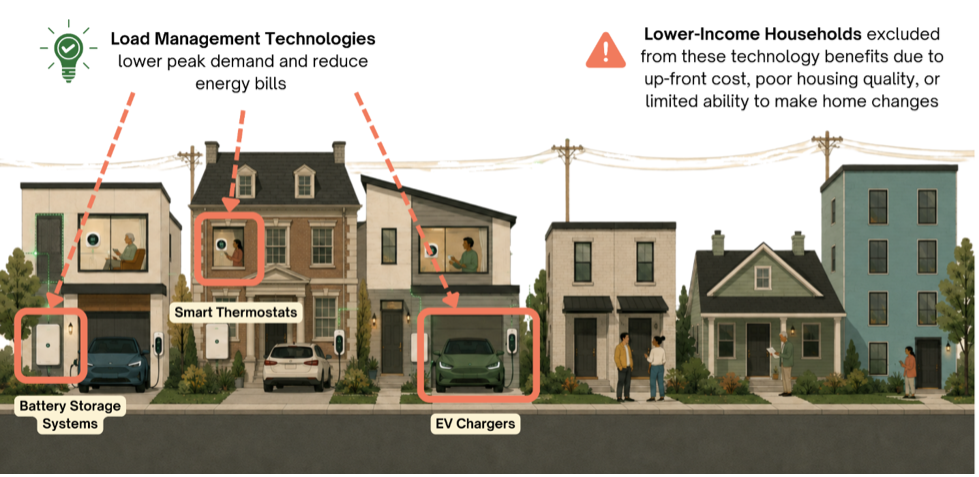
Without load management technologies, the only way for these households to achieve equivalent savings is to reduce their electricity use at the expense of their comfort, or to manually delay their consumption to overnight or early mornings. Neither of these options is feasible for shift workers, families, or medically vulnerable residents. In fact, the time-based electricity rates that allow energy savings when paired with load management could actually result in bill increases for these energy-insecure households.
Energy programs and electricity rates that don’t account for these equity challenges will leave many households out. The household benefits of load management will flow mainly to wealthier residents, and the grid benefits will also be limited.
Three steps to make load management work for more households
Through a partnership between Ecotrust Canada and UBC’s Sustainability Scholars program, I evaluated technologies and financial incentives that can harness the power of load management to deliver benefits to energy-insecure households and the grid. Based on my research, some important recommendations were:
- Making low-cost load management technologies available to energy-insecure households.
In July 2026, BC Hydro announced that it would offer free smart thermostats through its Power Smart 2.0 program. BC Hydro should expand its offerings to include free water heater controllers and to cover installation costs, at least for lower-income households.
B.C.’s retrofit and rebate programs (such as the Energy Conservation Assistance Program and Energy Savings Program) should also cover load-sharing devices in cases where installing a heat pump or other electrical appliance would otherwise be impossible or require a costly electrical upgrade. These technologies can lower program costs and household costs and reduce pressure on the electricity system, lowering costs for all customers. A win-win!
- Adjusting electricity rates so more households can save on their energy bills, while reducing their peak demand.
BC Hydro should adjust its current time-of-day rate to expand its benefits by offering a reduced rate immediately before 4 p.m. and after 9 p.m., while retaining an overnight EV discount. This would allow households with load management devices like water heater controllers to benefit from the time-of-day rate, instead of mainly EV owners. BC Hydro should also introduce a new electricity rate that offers a fixed monthly charge for electricity in exchange for participating in BC Hydro’s Peak Saver program.
- Incorporating equity-centred program design practices in load management initiatives.
As BC Hydro works to promote the use of load management and demand response, it should build equity into every stage of design and delivery. For example, programs should provide information that is clear, multilingual, and focused on everyday benefits. Spark Northwest, a Seattle-based energy non-profit, holds community information sessions on home battery system rebates and explains how long a battery can keep a fridge running or how many times it can charge an iPhone.
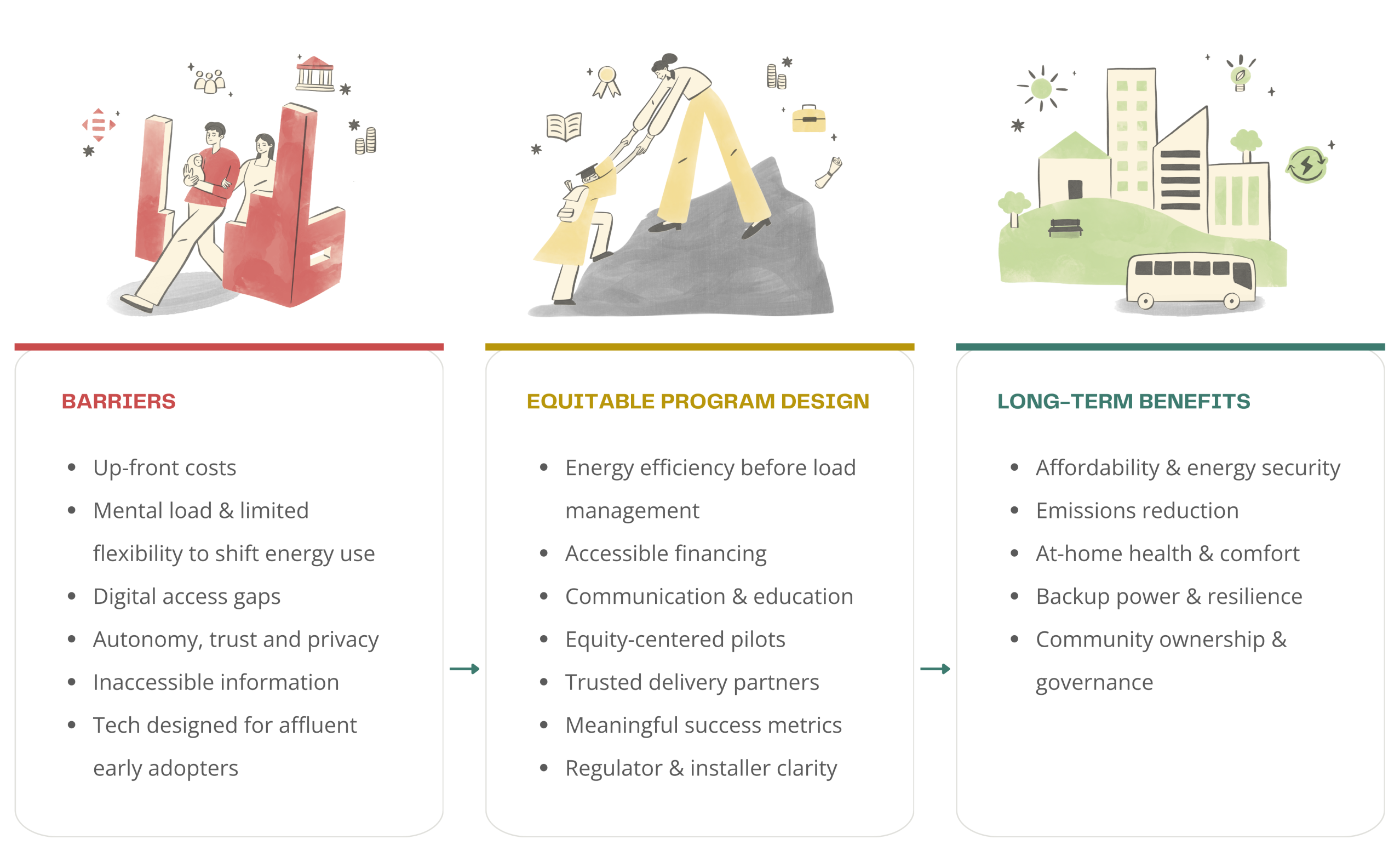
When load management programs and electricity rates are guided by evidence about what different households need, they can overcome barriers, expand participation, and deliver lasting benefits to marginalized households. This can help improve comfort, health and affordability, as well as grid resilience and capacity, helping to build a cleaner, more electrified future for all.