
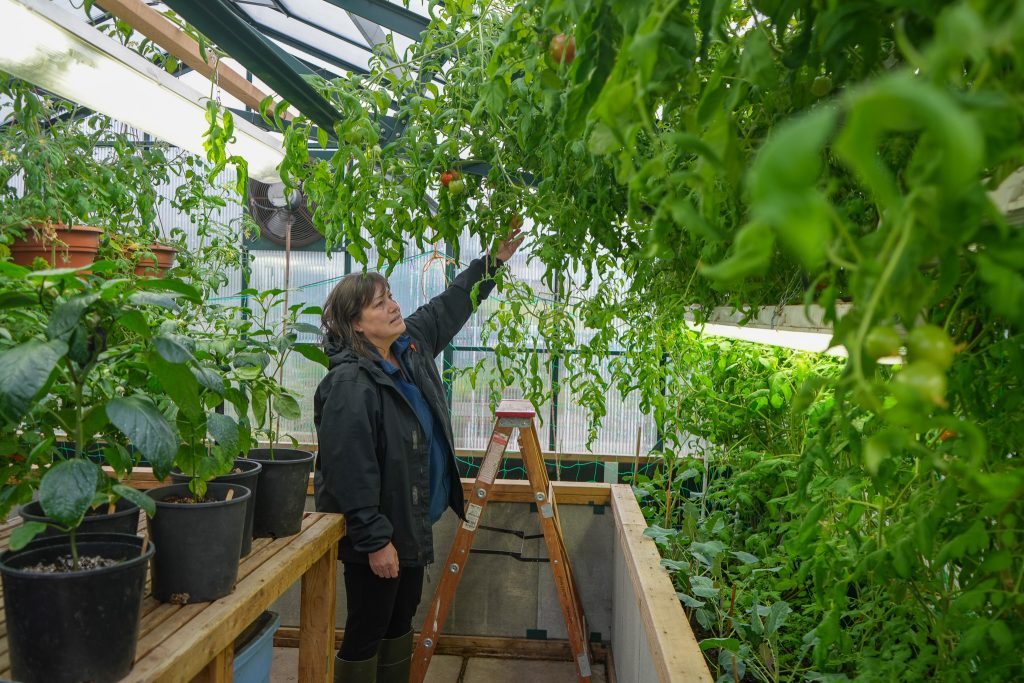
Dianne Villesèche picked me up in her Jeep, the backseat full of garden supplies, and gave me a tour of what is becoming the North Coast Food Hub. In between gusts of wind and rain, she drove me to five schools and one former school site, where “the Hub” – the community-led initiative that Dianne is shepherding – is expanding greenhouses and gardens with the school district.
“And this,” she gestured to the squared-off foundation next to the defunct Westview School, “will be a 25×98-foot greenhouse. All the food grown here will be distributed through the school food programs, the Friendship House, Salvation Army, and Food Bank, and sold at a community market.”
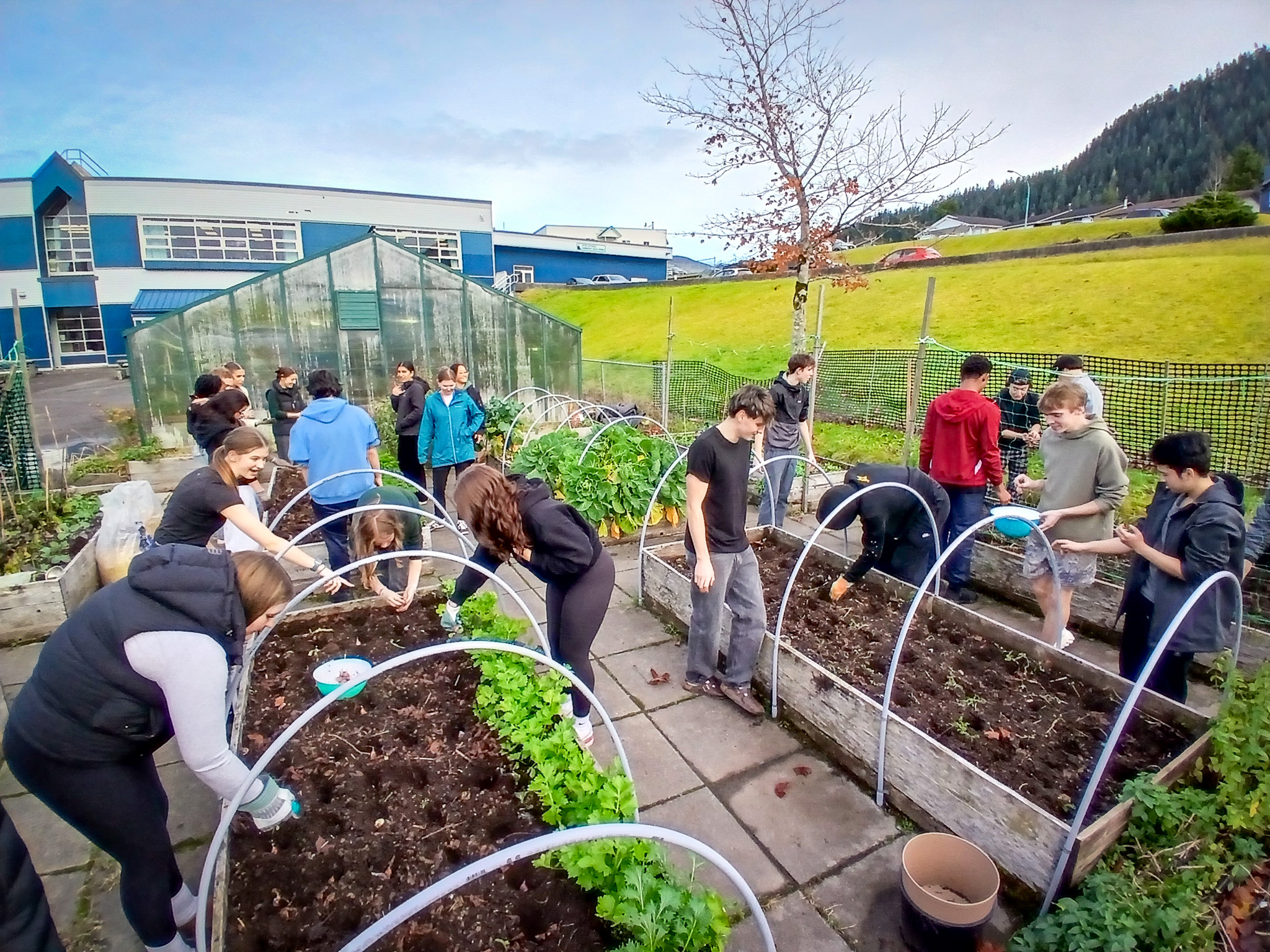
It was November. Over 1,400 garlic bulbs had been planted, and vegetables growing in greenhouses were seeing only 10.5 hours of daylight filtered through endless rain clouds. In seven months, this northern city on Ts’msyen territory will experience 18.5 hours of light. With greenhouses alongside outdoor garden beds – and Dianne, the Ecotrust Canada team, teachers, students, and community members all coming together – the harvest promises to be a boon for a city facing the province’s highest child poverty and food insecurity rates.
Dianne’s storied past explains why she’s one of the anchor roots behind the North Coast Food Hub. As a child, she was raised in the North by her grandmother, who took her out onto the land to harvest plants and learn from the land itself.
“I remember her teaching me the smells – how the plants looked and felt. That inspired a lifelong urge to learn more about plants to honour my grandmother. I’ve spent over five decades learning about plants, their uses, and how to make traditional medicines,” Dianne said.
As a young woman in the eighties, she worked as a commercial fisher on seiners and trawlers in Prince Rupert. “It was the heyday of fisheries. The seafood access was incredible – restaurants, fine dining, and local seafood were everywhere. When I left for 27 years and returned, all of that was gone,” she said.
When she left Prince Rupert, she headed north to Whitehorse, in the Yukon. Naturally, despite one of the country’s harshest climates for gardening, she began growing food. Season by season, she learned to improve yields in a place with limited frost-free days and shallow soil. While there, Dianne volunteered with the Northern Cultural Expressions Society, a First Nations carving school for local youths. Her time in Whitehorse taught her the value of people working together, of supporting youth through meaningful, hands-on projects, and of the joy that comes from growing your own food.
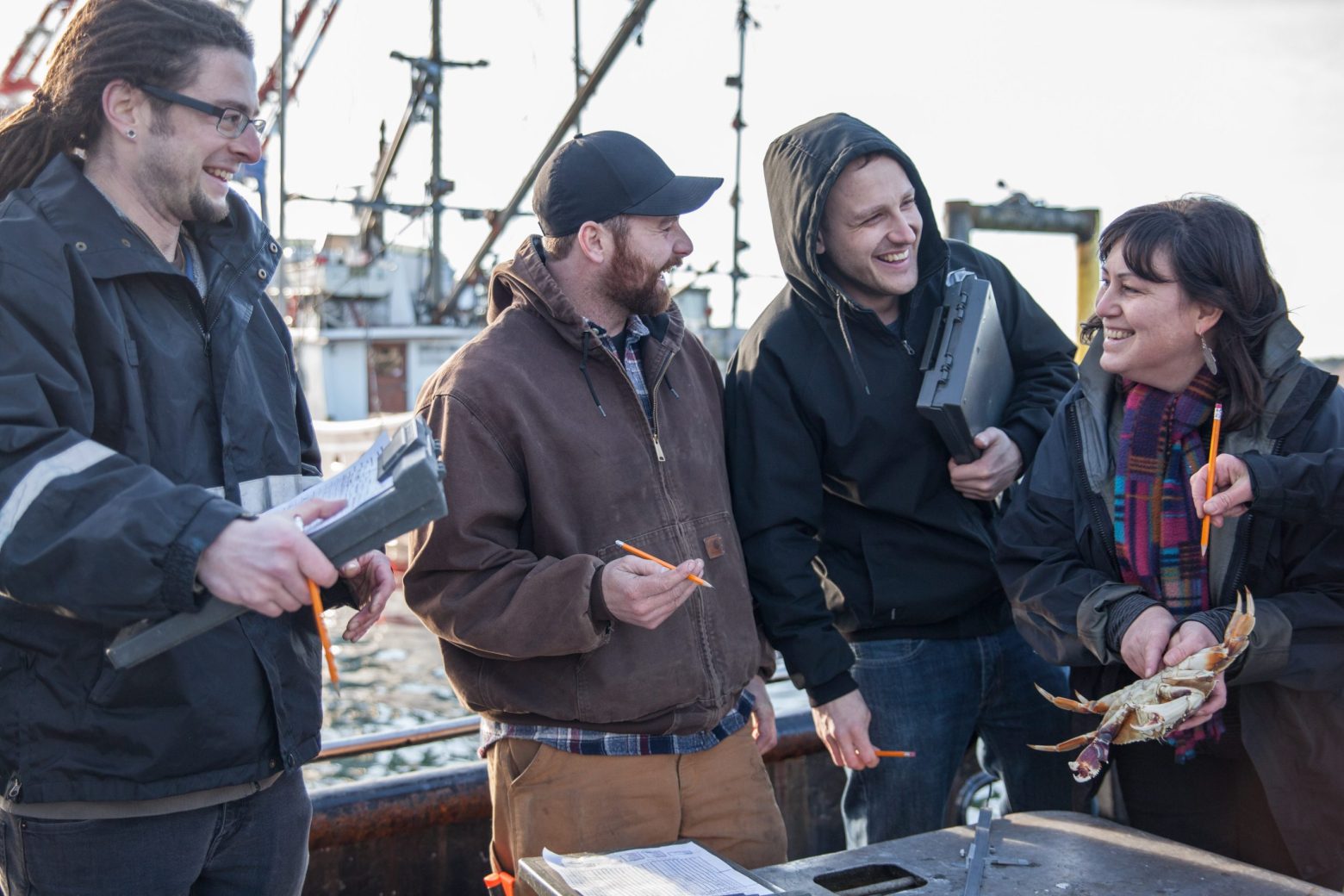
In 2013, when Dianne moved back to Prince Rupert, she took up backyard gardening and faced the challenges of a city built on rock and muskeg that receives an average of 120 inches of rain a year. In January 2018, she joined Ecotrust Canada and became the Program Manager for North Coast Fisheries, training seasonal observers and fish harvesters to collect data on Dungeness crab and salmon. Outside of work, Dianne created a Facebook page called “North Coast Harvesters.” In six years, the page has grown to 3.4K members and has become a welcoming forum for curious, like-minded food-lovers across Northwestern BC and the Yukon to share knowledge and learn from one another.
In 2024, Dianne joined the Food Systems team and has had her hands full, literally. In just one year, she co-planned, pitched, and fundraised for an interconnected school-centred food system that is rapidly taking shape. In 2025, she hired the talented Chelsey Wingfield as a full-time greenhouse and garden coordinator, purchased a reefer van to deliver hot and cold food to schools, acquired fish-processing equipment for the school kitchen, deer fencing and LED lighting for greenhouses, and secured timber for garden beds along with yards of healthy soil.
This isn’t a solo show. Planning, networking, and relationship-building are full-time work, especially in a remote city where you know nearly every face at the grocery store. To ensure the community is part of the planning process, Dianne has been working closely with members of Indigenous communities, School District 52, and the City of Prince Rupert to host sessions that guided the new Community Food Action Plan – a roadmap to improve food access and build a resilient food economy for everyone.
“The resilience of a community food system impacts every person who lives in it. Dianne’s amazing work with her partners on the Food Hub is making big strides to get local and healthy food into schools and the community, with the potential for big impact in a town that has high poverty and food insecurity rates among children,” said Myfannwy Pope, the City of Prince Rupert’s Director of Planning and Development Services.
“Dianne approaches with an open heart, listens carefully and proceeds with intention,” said Jean Marogna, Principal at Conrad Elementary School. “She saw potential in the ideas that started out as seedlings and propelled projects by creatively sourcing materials as well as funding. She is also incredibly well-connected with programs and people and has been very successful at ensuring that projects are completed to the fullest.”
Last September, Conrad Elementary hosted its first annual Symposi-Yum in partnership with the City of Prince Rupert and School District 52, bringing together growers, harvesters, and service groups to share information, shape the food plan, and create a market space for local food vendors.
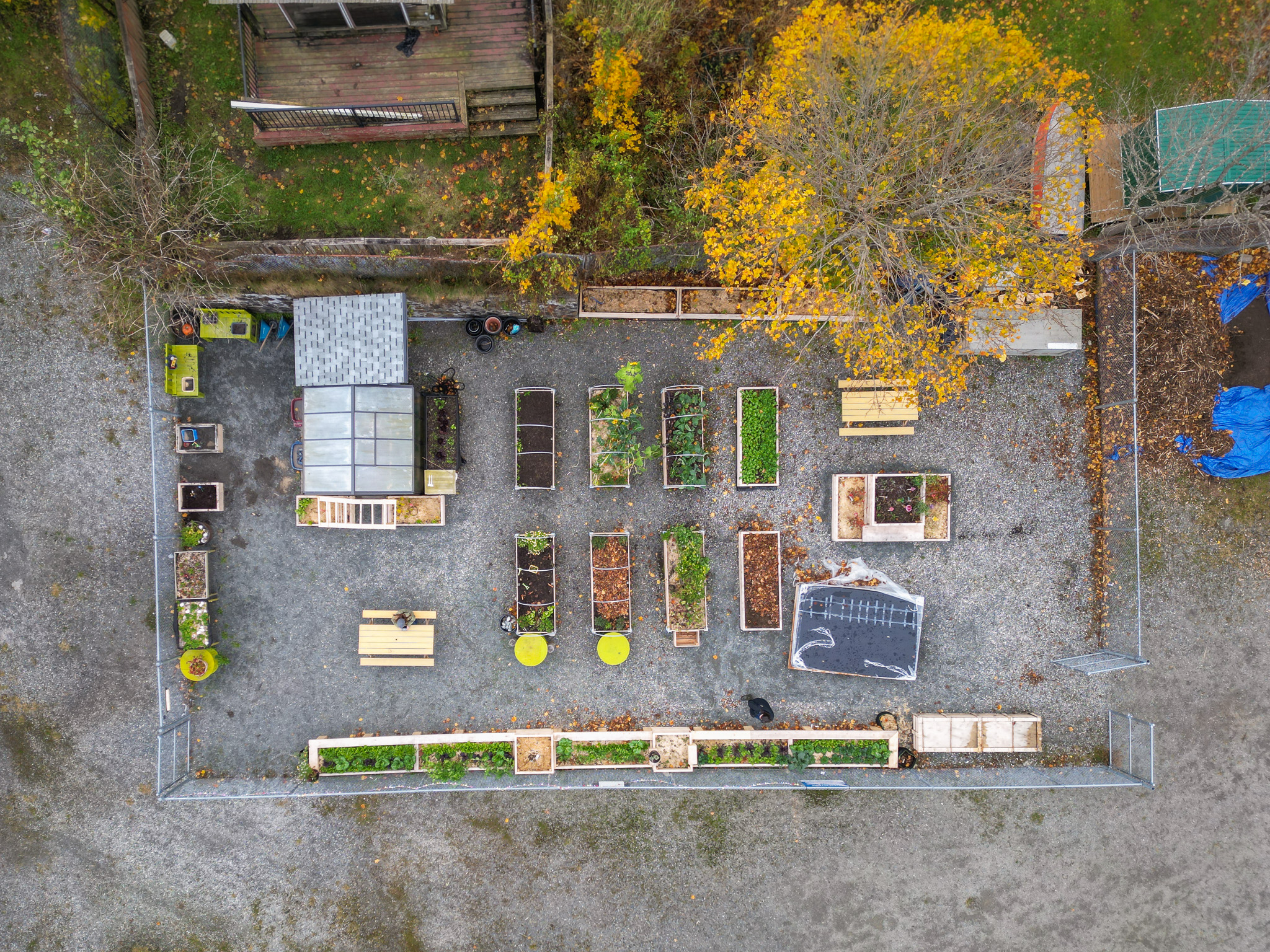
Focusing on working with schools is intentional. The school district has 1,850 students, of whom 462 are in the school meals program. “That was an eye-opener,” Dianne said. “It’s important to find ways to grow food, not only for school food programs, but for students to take home, to share with service groups like food banks, the Friendship House, and to inspire community members to grow food in their own backyards.”
Nadia Halward, the School District Food Coordinator, works closely with Dianne.
“By participating in the growing and having access to these urban agricultural spaces, we can help build a resilient and strong food system here in Prince Rupert that supports the daily nutritional needs of students in not only our school community, but the broader community as well.” – Nadia Halward, the School District Food Coordinator
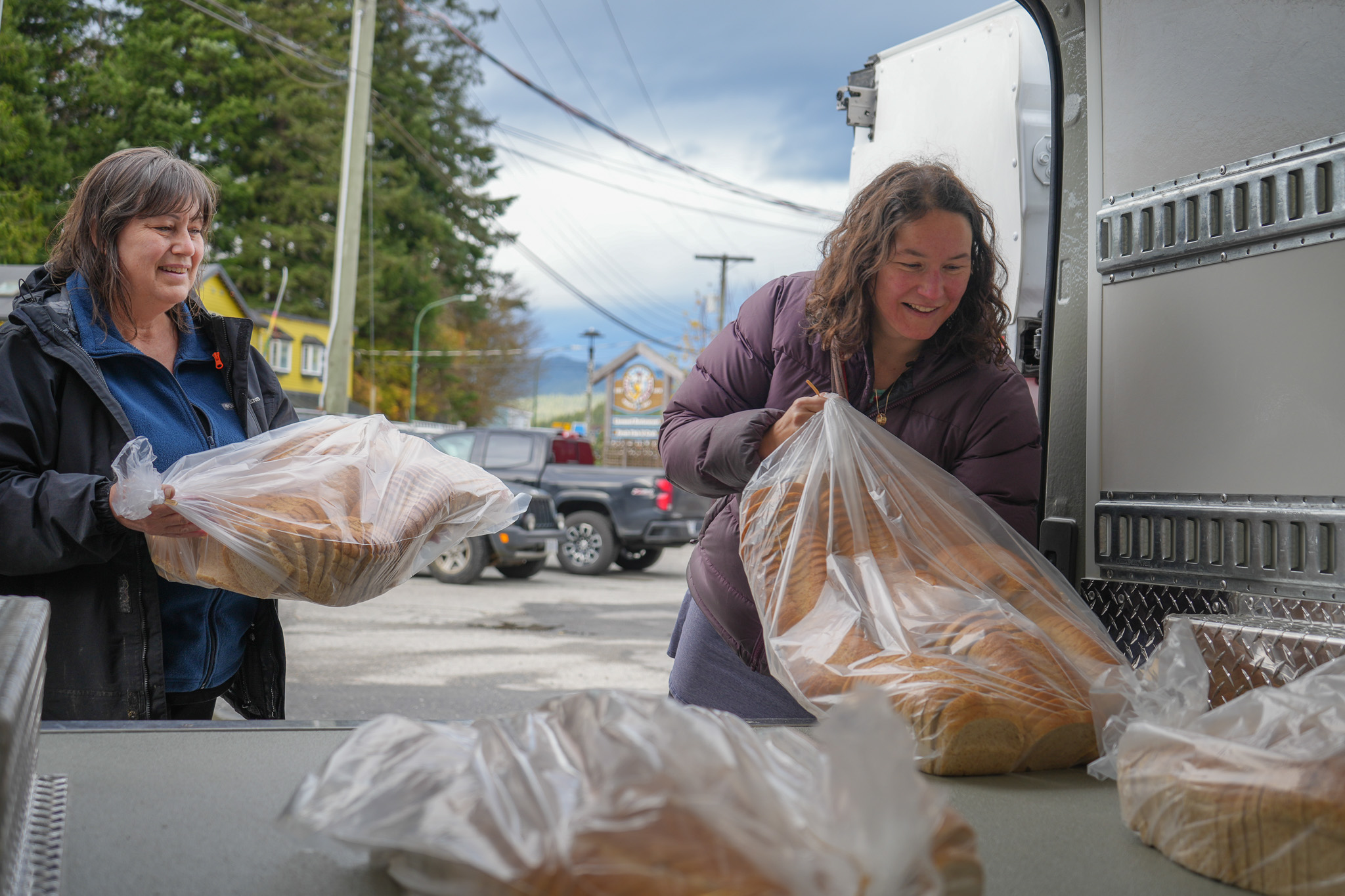
Dianne began working on the Salmon in Schools project in late 2024 and is collaborating with local seafood connectors – including Halward, the non-profit T. Buck Suzuki, and sushi chef Dai Fukasaku – to bring salmon into the school food program. The first annual Salmon in Schools fundraiser on March 1 will help purchase locally caught fish to introduce more culturally relevant and brain-boosting foods into school meals.
With Dianne at the helm, a woman whose northern life has been shaped by the land and sea, the North Coast Food Hub’s second year promises a bountiful harvest.
[Published January 27, 2026]