
Over six years ago, a friend, who was a high school science teacher with a vision, asked me to connect her with someone from our Community Fisheries program. Vania Ling knew that I worked at Ecotrust Canada, a non-profit organization known locally for its long-standing fisheries observer program. She was hatching a specialty marine science course for Grade 12 and wondered if our fisheries team would be interested in teaching the students about crab life cycles, biology, and how our observers handle and collect data aboard vessels.
We were in a sunlit community space in Prince Rupert, BC, next to the ocean—where small vessels for commercial and sport fishing came and went in the harbour, and where moored sea containers are a constant part of the background. I loved the concept of place-based experiential learning, and hoped it might attract younger generations to fishing careers (60% of commercial fish harvesters in BC are 45 years of age or older). I put her in touch with Katy Bond, our Program Manager for Area A and North Coast Salmon.
“That opened the doors for me in terms of connecting with more of the community,” Ms. Ling said. “Every year, we learn from Ecotrust Canada about how to observe and record measurements, like size and condition, on the crabs, which is done outdoors by the shore. It’s one of the students’ favourite activities, being out in nature and learning with friends.”
What started as a spitball conversation has now evolved into skill-building that introduces students to future career paths, and enriches their knowledge of the fishing and marine industries in northern B.C.
Growing the Curriculum
Over the years, the high school’s marine science course has expanded to include many more community partners. Ecotrust Canada’s fisheries team has been invited back to the outdoor classroom annually, and the program now has 40 students divided into two classes, studying fish, invertebrates, marine mammals, and, new this year, algae and seaweed.
“It’s so important to have outreach with the youth,” said Katy. “That’s the future of the fishing industry. It’s good for them to know what career paths are available in town. There are so many jobs, not just fishing, but also in fish processing, transportation, Nation-led fisheries programs, the Department of Fisheries and Oceans, boat repairs, bait packaging, and so on.”
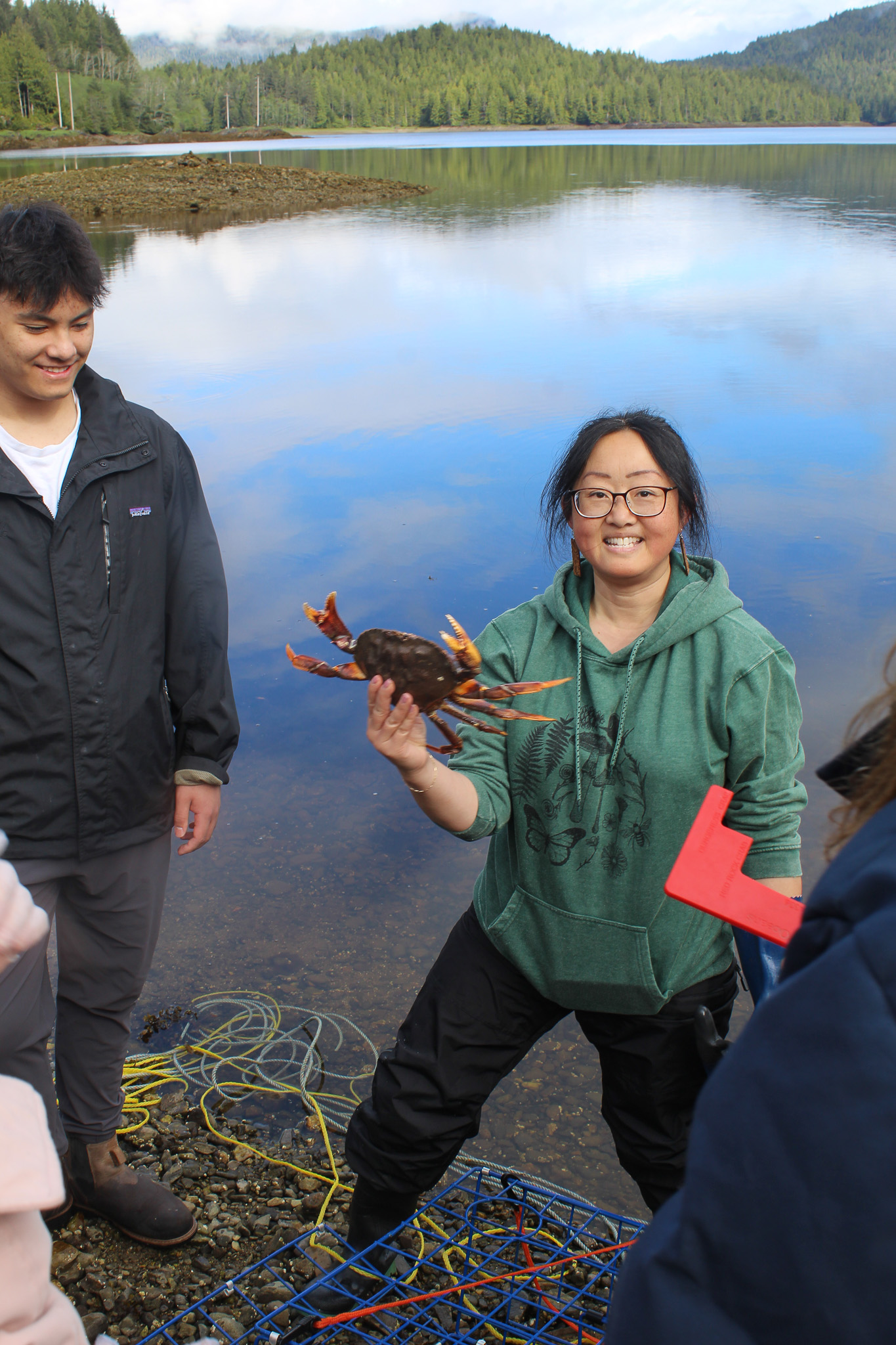
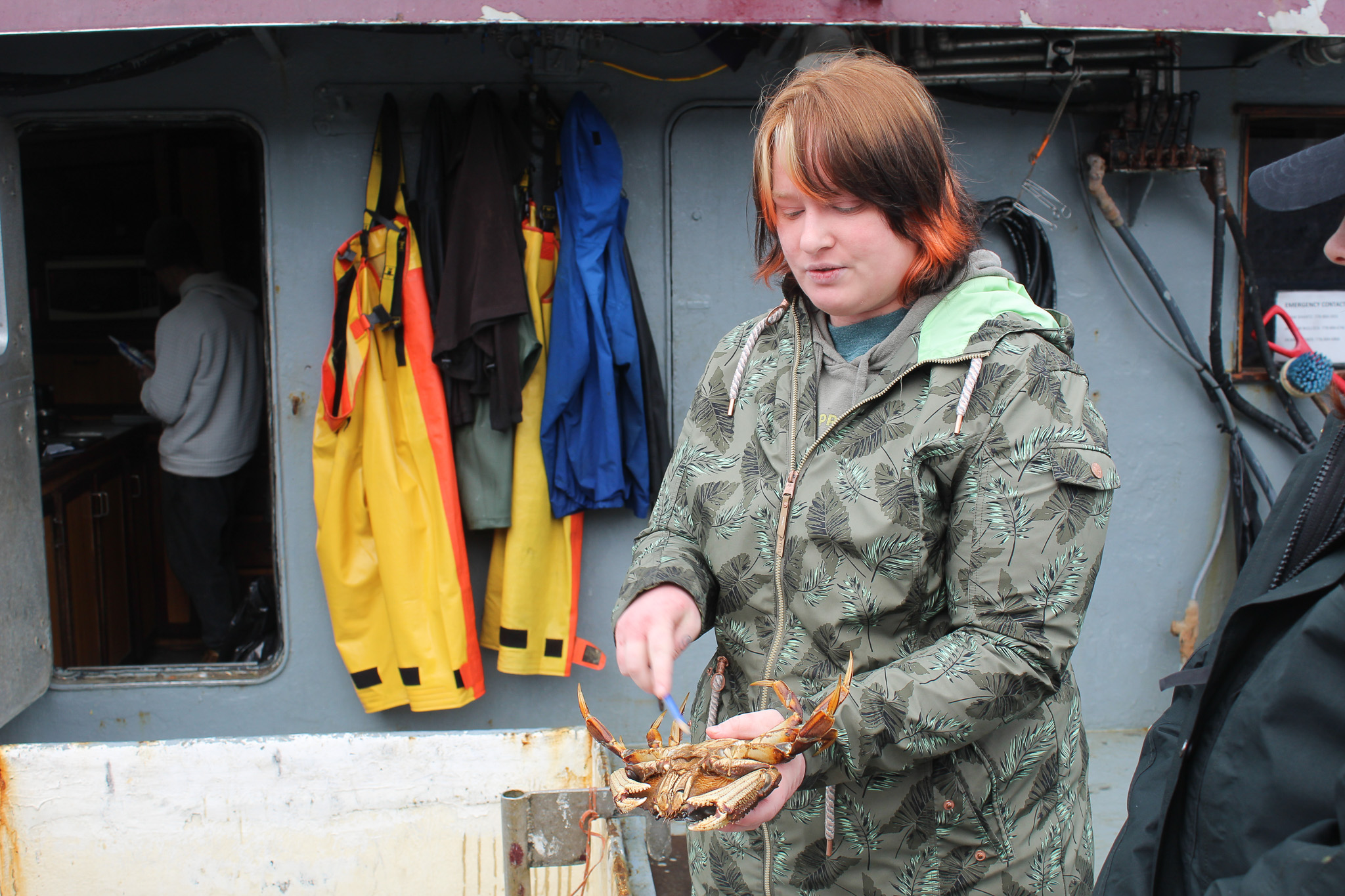
Katy shows the students how to safely handle a Dungeness crab. She teaches about the features on a crab that could help them identify whether the crab has previous injuries or shell disease, whether it’s male or female, and how to measure size, both of which are important for legal retention.[1]
Over the years, Katy has met students who come from families of commercial fish harvesters. She thinks the recognition is good for kids who can say “that’s my family’s lineage.”
“It’s important in this community, with such a strong tie to commercial fishing, to see it in the classroom setting. I think it makes it more real. It provides them space to get excited about it and builds connections.”
The course runs in the spring semester when, ideally, more fisheries are open, the snow and ice melt, and the kids can be on the water. If conditions are right, another popular lesson is the oolichan run in the Skeena River—a small oily fish prized for its nutrients, medicine, and ceremonial uses among First Nations in the region. Before they go to the river, Elder Ben Spencer shares his knowledge with the class on oolichan harvesting, in collaboration with the Indigenous educational team at Wa̱p Sig̱atgyet.
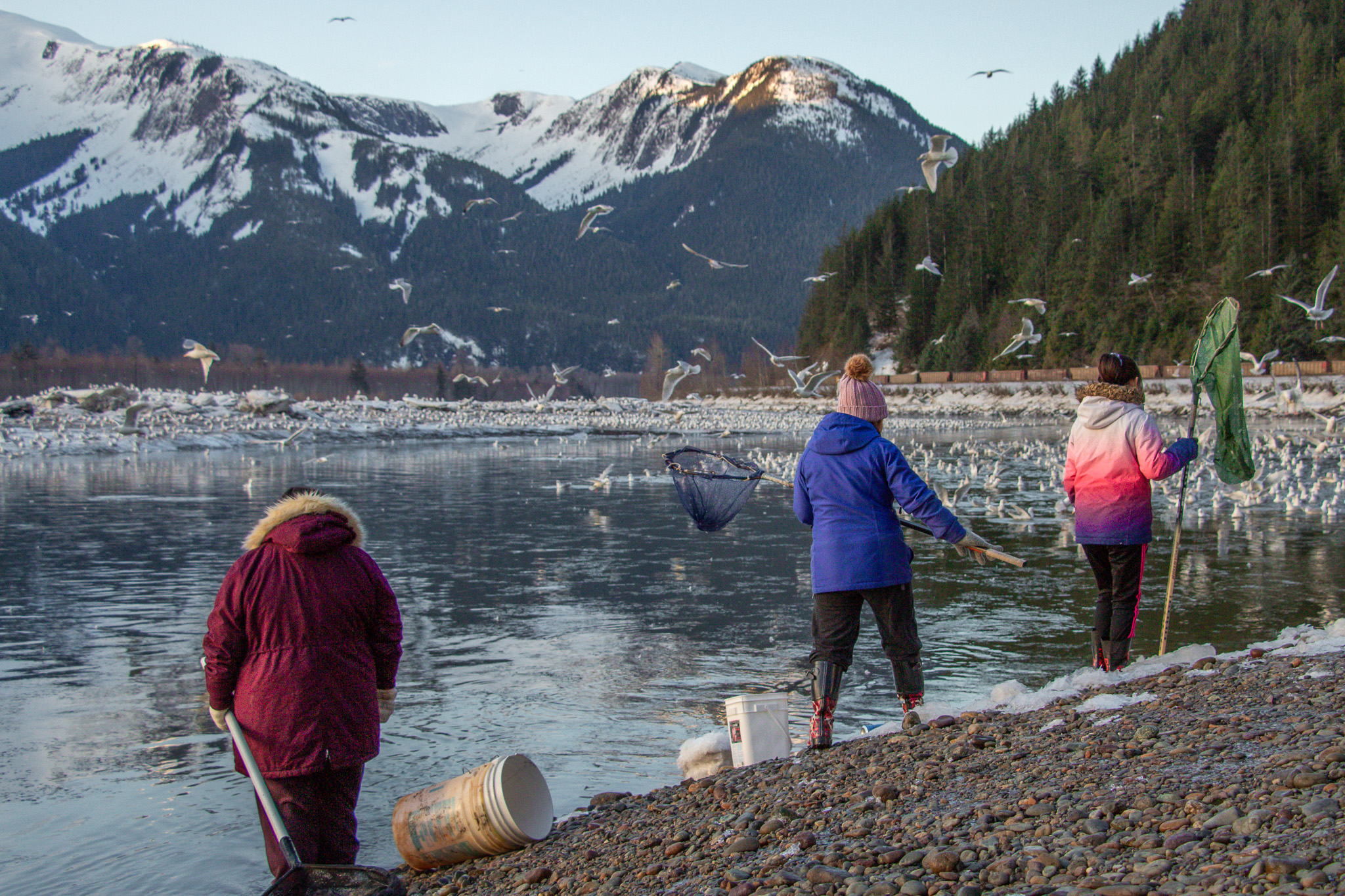
“It’s so wonderful how much it’s grown since that idea first started,” Ms. Ling said to me over the phone as the school year was wrapping up.
This year, the school’s Food Sovereignty mentor, Christina Leighton, connected her class with Oots’n Reconnection Services for an experiential boat tour, where they looked for herring roe on kelp. She has been a big part of enhancing the class with hands-on work.
“When we’re studying all these species, we’re not just dissecting them; we’re learning to filet and prepare them for meals, and the kids love eating it too. It’s full circle,” Ms. Ling said.
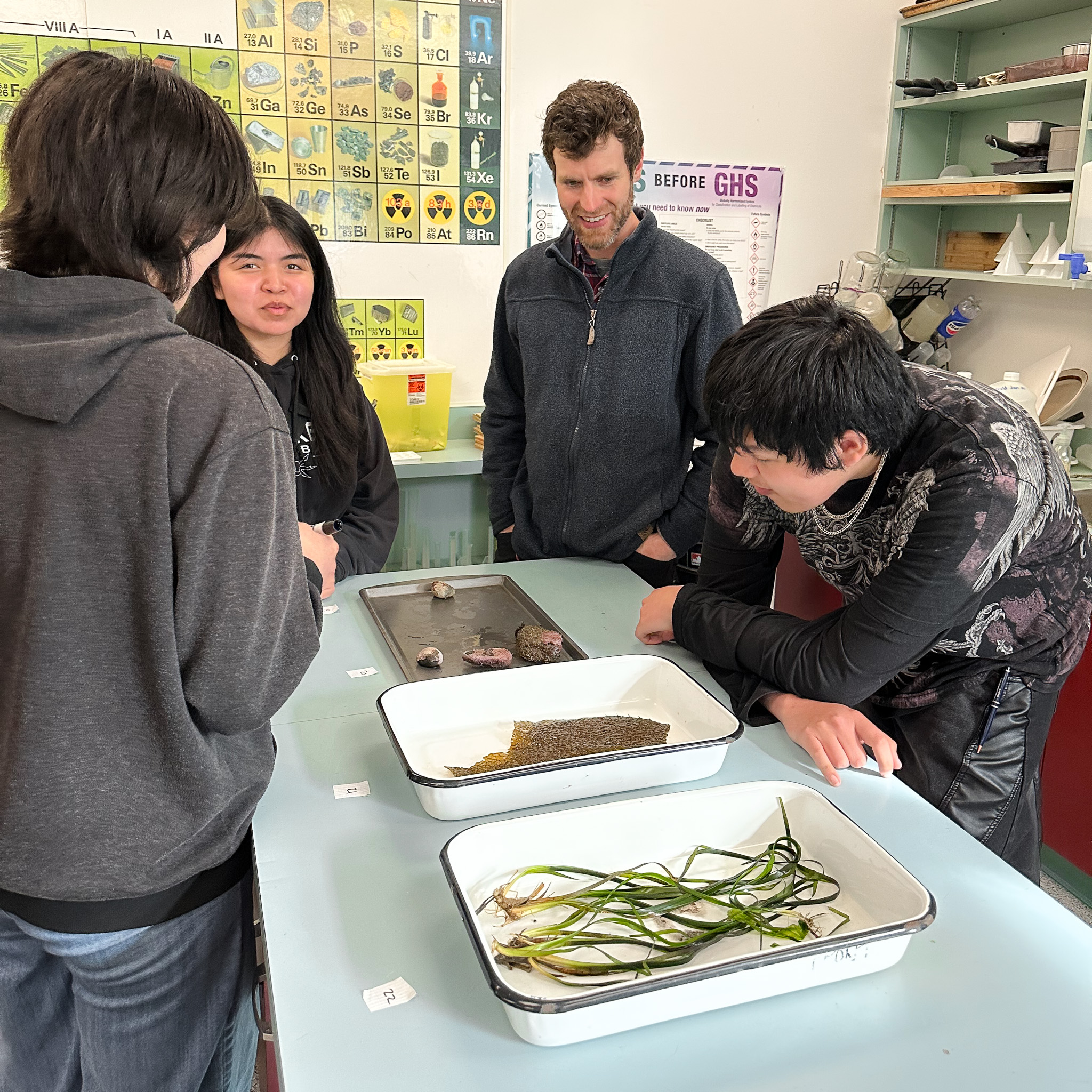
Seaweed was another addition this year. Ms. Ling has always wanted to introduce seaweed into the curriculum, as it’s not only a local marine species but also a culturally significant food for the Ts’msyen people.
Last October, she attended Ecotrust Canada’s open house, a celebratory event for a community we’ve had roots in since 1996. In conversations, she learned about our Food Systems program and how we’re supporting Metlakatla First Nation’s black seaweed project.
The following school semester, students got hands-on with over 20 different seaweed samples, courtesy of Dr. Siobhan Shenk, the marine biologist running Metlakatla’s seaweed research program, and Connor Speer, our Project Manager for Coastal Food Systems. They learned about human and commercial use of seaweeds, like how it’s used in ice cream as a stabilizer; kelp and pyropia (red seaweed) life cycles and farming; and careers in this field.
Alumni Stories
Former student Isaac learned about Ecotrust Canada after taking the course in 2022. He applied for and worked for us as a fisheries video reviewer before moving on to pursue his tickets to work on a boat. He earned his Bridge Watch Rating, an entry-level certification for working as a deckhand on commercial boats, which led to a job with BC Ferries. I asked if the course played a role in his current career pursuit.
“Yes, it did, but I’ve always been into boats and fishing my entire life. Coming from Prince Rupert, fishing has always been appealing. I’d say it’s a combination of the class and the environment I was raised in,” Isaac said.
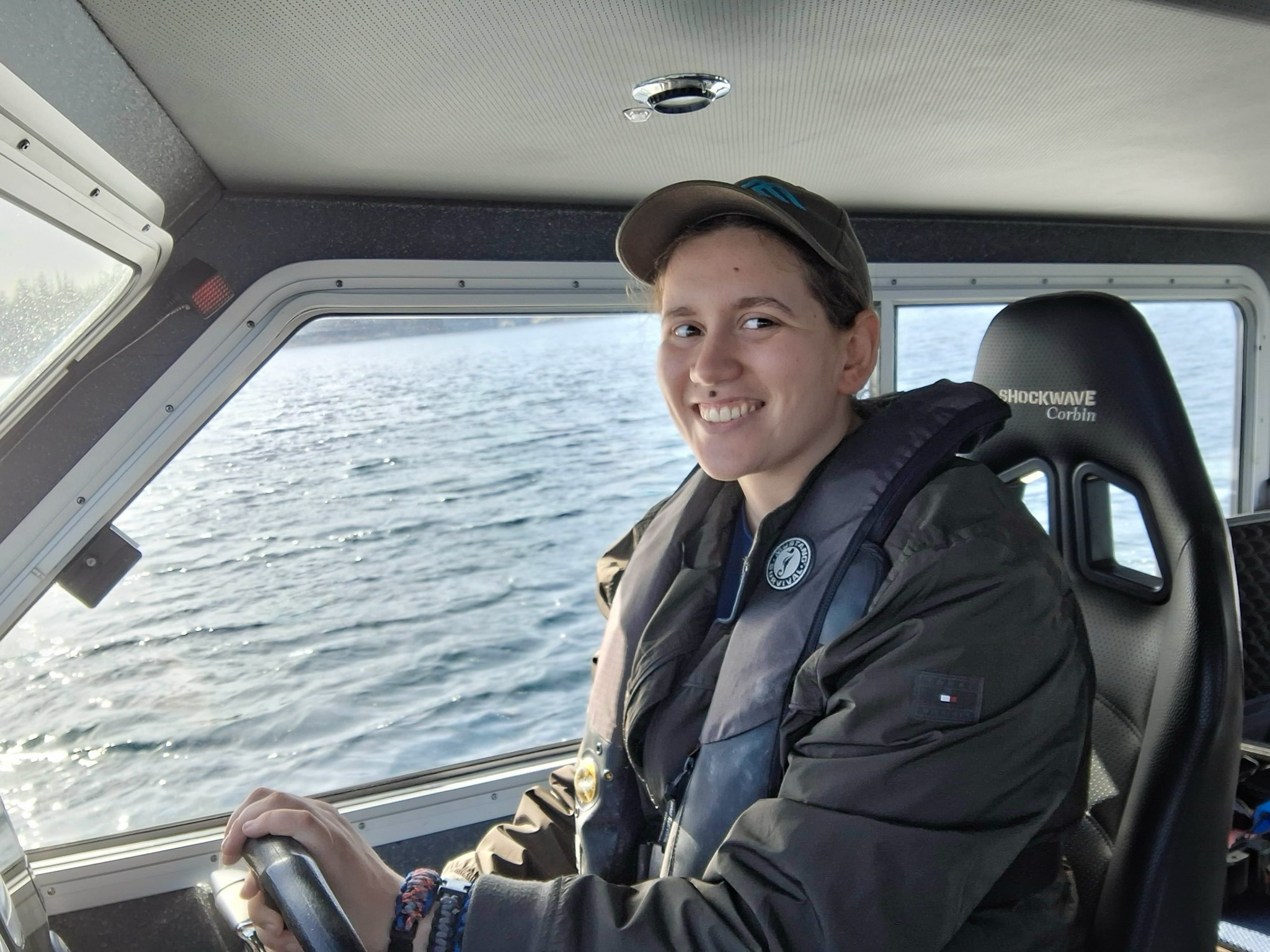
Courtney King comes from a big fishing family and was curious about working on the water. She took the course in 2025. “This furthered my interest and helped me realize that I definitely really love this.”
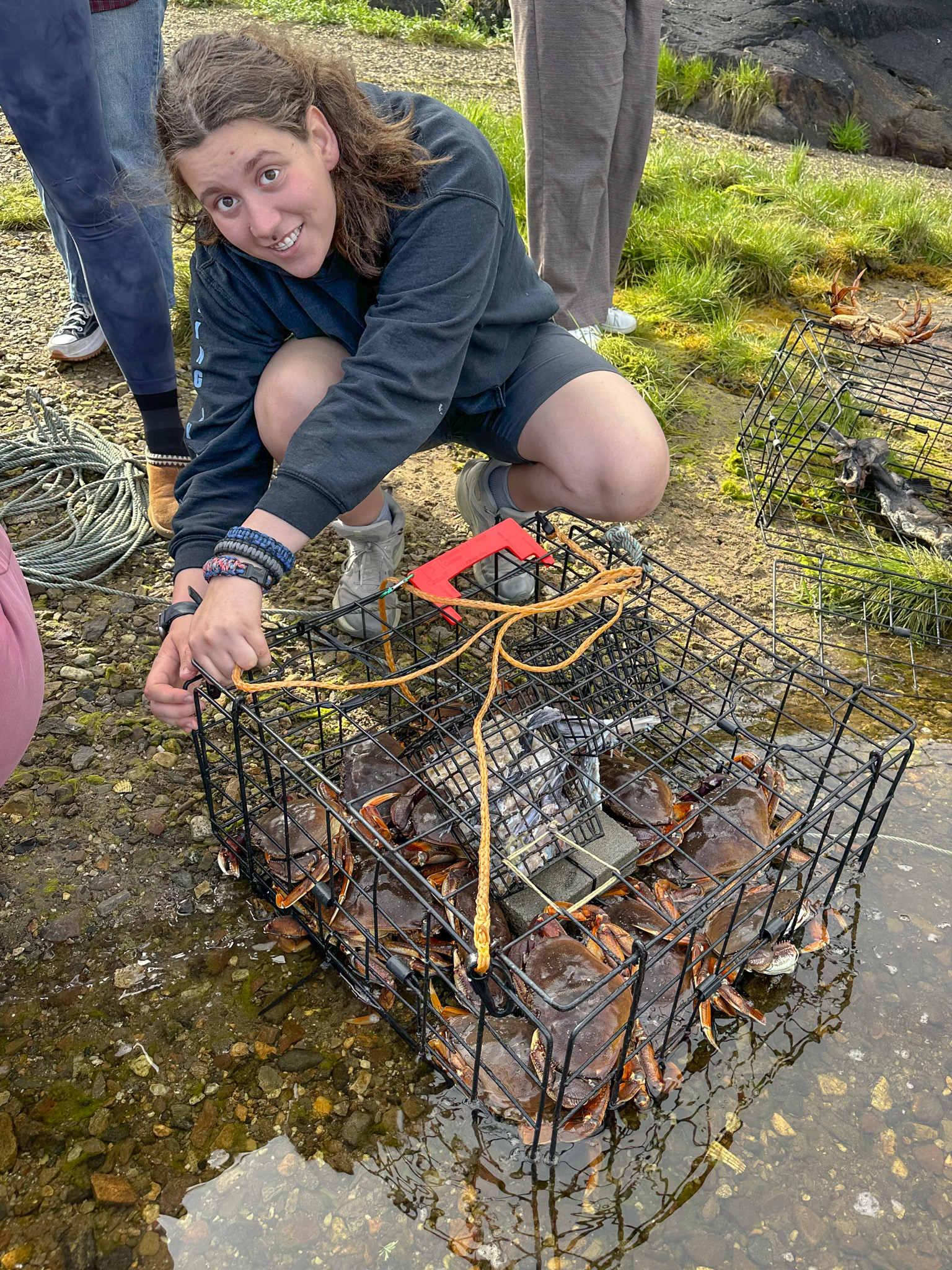
She’s currently taking environmental and sustainability studies at the University of Northern BC in Prince George. Over the summer break, she landed a position with the Port of Prince Rupert’s Environmental Compliance Team.
“Ms. Ling is a great teacher, and I hope she continues this class. It’s just great for kids, and I hope it encourages more people to join the fisheries and environmental community,” Courtney said.
In the past few years, Ms. Ling has bumped into former students who have become commercial fish harvesters, and others who told her that the course helped them discover something they didn’t know they were interested in.
“A student who just took my class got hired by Rupert Meats’ fish and crab processing department. He told me his experience in my class with filleting and shucking crab got him the job, and he’s loving it!” Ms. Ling said.
At a grocery store, she ran into a student’s mom, who revealed another ripple effect of the marine science course. After her son had taken the course, she said it opened his mind to what he had access to. Previously, he wasn’t interested in going oolichan fishing with his uncles and family.
“After taking the course, he was asking them if they had chest waders or a dip net he could borrow,” Ms. Ling recalled their conversation.
An idea that took root over a conversation between friends six years ago has blossomed in more ways than one.
—
[1] Ecotrust Canada wasn’t involved in the acquisition of fish, and this was not a training course for designated fisheries monitors.