
2025 has been one of the most engaging and productive years in our 30-year history – what an anniversary it has been. From land to sea, we have worked alongside our community partners to demonstrate how people in place can build economies that provide for life.
Below is our yearbook of highlights from each of our five programs: Community Fisheries, Climate Resilience, Food Systems, Indigenous Homelands, and Community Energy.
January
FOOD – Connor Speer, our Mariculture Coordinator, compiled a comprehensive guide to regenerative ocean farming in Northern BC, breaking down technical terms and the potential of growing seaweed and scallops. The guide explores how this emerging industry can support both ocean health and food systems. Read more about regenerative ocean farming.
ENERGY – With over 230 participants and growing, the Home Energy Savings Program entered its second year supporting households looking to improve energy efficiency. By enhancing home energy performance, we aim to reduce costs, address safety risks, and lower greenhouse gas emissions. In 2025, we expanded this free service to households in Quadra, Cortes, Denman and Hornby Islands, and qathet region (Powell River), while continuing to deliver free personalized service to Prince Rupert and northern Vancouver Island.
February
FISHERIES – The Vancouver Sun highlighted our policy work with partners in the Fisheries for Communities network as a crucial opportunity to strengthen local economies amid U.S. tariff conflicts. The article addressed fixing our broken seafood system as a key step to building community food security. Read more.
CLIMATE – Our Climate Resilience team attended the Indigenous Lands Symposium in Bawating (Sault Ste. Marie), where over 270 people gathered to discuss the future of healthy lands and Indigenous peoples in Northern Ontario. This third annual gathering, facilitated by our partner Wahkohtowin Development, achieved its largest turnout yet, focusing on Indigenous Protected and Conserved Areas (IPCAs), sustainable forestry, and carbon financing as Canada pursues its goal of protecting 30% of forests by 2030.

March
LEADERSHIP – Chuck Rumsey, President and CEO, and Jenn Meilleur, Director of Programs and Impact, shared their reflections on how to respond to global economic uncertainty through place-based economies. As political and economic tensions escalate, they outlined how our work deliberately advances local economic systems that keep wealth in communities for the direct benefit of people and place. Read how we are meeting the moment.
April
ENERGY – We celebrated a major policy victory when British Columbia announced expanded access to heat pumps for renters and low-income residents, investing $100 million over two years to provide approximately 8,300 heat pump rebates to those who need them most—bringing bill savings, safety, and comfort in extreme weather. Read our full response.
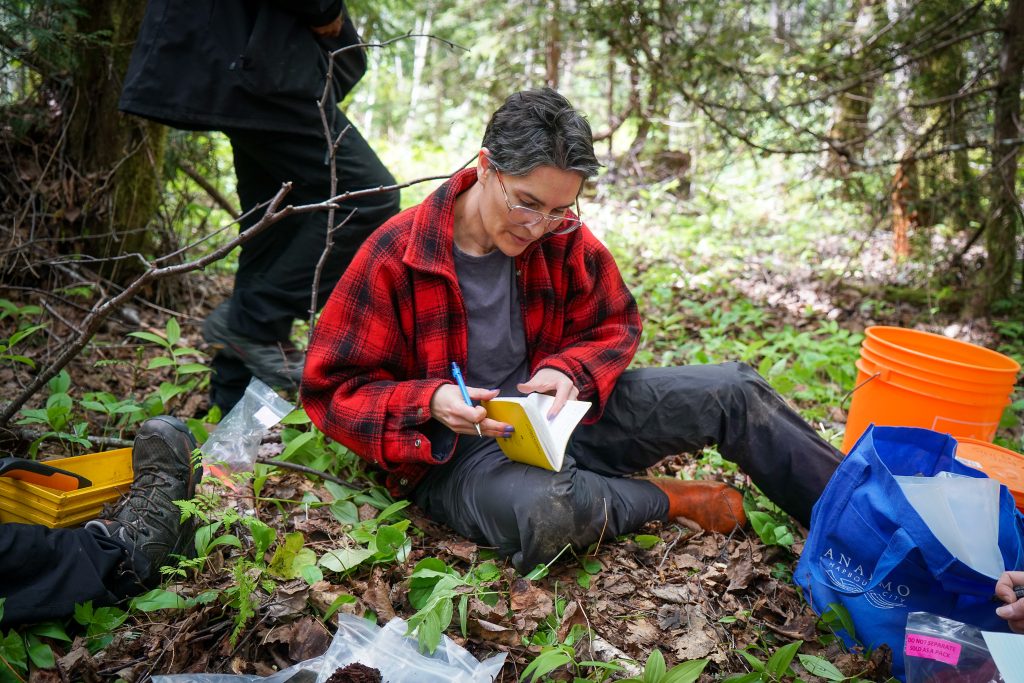
CLIMATE – The Climate team travelled to Bella Coola, BC, and visited the Nuxalk Nation in the Great Bear Rainforest, where they worked alongside Nuxalk Coastal Guardian Watchmen to measure carbon stored in forest soils. The team dug soil pits and collected samples across 181 hectares of private land purchased by the nation to prevent logging and development, demonstrating how local Indigenous stewardship builds long-term climate resilience while protecting ancient forests that continue pulling carbon from the air.
May
CLIMATE – Michelle Connolly, Director of our Climate Resilience program, introduced the new Climate Resilience Network for BC’s Central Interior, a five-year initiative designed to catalyze local communities as stewards of the region’s waters and lands. The network will build relationships among forest-based communities, conduct regional analyses to protect natural ecosystems, and support Indigenous and rural communities with visioning, land-use planning, and access to funding.
FOOD – We launched the North Coast Food Hub in Prince Rupert, BC, on Ts’msyen territory, as a community-driven, school-centred initiative bringing together School District 52, Indigenous partners, local government, and community organizations to transform food access challenges into opportunities. The project supports the development of school and community growing spaces, including two school-based greenhouses and a large community greenhouse, weekly community markets, and delivery of educational programming on food production, harvesting, processing, and nutrition, all while strengthening the local food economy and increasing access to healthy, culturally relevant food for students and the broader community.

ENERGY – Over 110 policymakers and experts for our second Home Energy Justice Forum on May 27, to address BC’s energy insecurity, which affects over 250,000 households. Participants focused on three key issues: low-carbon home upgrades, affordable energy, and protecting people from extreme heat. The forum generated concrete action items, including regulating safe indoor temperatures in rental units, converting mechanical systems to heat pumps, and recognizing safe housing as a human right. Read the proceedings report.

June
FISHERIES – During the crab fishery closure, our team helped coordinate gear recovery in the Hecate Strait, the waters between Prince Rupert and Haida Gwaii. This is an annual initiative spearheaded by Area A fish harvesters. This year, they recovered 531 crab traps, returning 519 usable gear to the fleet and recycling the rest. Area A collected $23,400 in buy-back fees to fund stewardship initiatives within the seas they harvest.
HOMELANDS – Ashli Akins shared a blog about the Homeland team’s work on the Indigenous Housing Landscape Report for the McConnell Foundation—a comprehensive analysis of civil society actors addressing Indigenous housing needs across Canada. The report included extensive research, interviews with thought leaders, a systems map, and recommendations for shifting from housing crisis to housing solutions. Read about it here.

CLIMATE – The Climate team spent a week in the Wilp Gwininitxw Protected Area in the upper Skeena watershed, measuring carbon storage in vast forests as part of supporting Indigenous-led conservation efforts. The work builds on our relationship with Wilp Gwininitxw, supporting their successful application to the federal Nature Smart Climate Solution Fund. Caylin Sun wrote about the experience in this blog; read it here.

July
We shared our 2024 Annual Report and reflected on 30 years of work, celebrating the evolution from our original “conservation economy” mission to “building an economy that provides for life.” Read our Annual Report and Impact Report here.
FISHERIES – Salmon monitoring season kicked off in the North Coast (Prince Rupert, BC). Our team spent four days observing activities on gillnet boats, collecting data on species, fish condition, and what was released or retained. We also partnered with Fisheries and Oceans Canada (DFO) on salmon stock assessments, which helps them make evidence-based management decisions.
Also this month, our team was at the docks to monitor salmon caught by Indigenous fish harvesters for the North Coast Skeena First Nations Stewardship Society, Metlakatla and Lax Kw’alaams demonstration fisheries. Then, for the first time, we travelled inland and provided dockside services to the Kitsumkalum River demonstration fishery in Terrace, BC. These demonstration fisheries provide Indigenous harvesters with additional economic opportunities and blend commercial fishing with food, social, and ceremonial harvesting in a single trip—restoring traditional practices that colonial regulations had forced them to separate.

FOOD – We launched the Community Food Action Plan to guide collaborative efforts in strengthening local food systems across the Prince Rupert region. Additionally, we secured funds from United Way BC, Farm to Cafeteria, and Second Harvest to add equipment to the Prince Rupert school district’s fish processing kitchen — expanding capacity for local seafood procurement and processing for school meals — as well as deer fencing and LED lighting for greenhouses. With the funds, we purchased a reefer van to deliver hot and cold food to schools throughout the district.

FISHERIES – Between February and July, our North Coast team supported Area A crab fishers with monitoring work. A key part of this work involves softshell monitoring—assessing whether crabs have hardened sufficiently after moulting to ensure good meat quality. A charter vessel completed nine softshell sampling trips, sampling 8,203 crabs to assess crab hardness and inform the timing of fishery closures and openings. Our staff participated in two of these softshell surveys and also conducted one additional biosampling trip to gather detailed crab data to support fishery management.
August
FISHERIES –The collaborative dockside monitoring program between the Haida Nation and Ecotrust Canada completed its first full year of training on Haida Gwaii. The program trained 12 community members in salmon, halibut, and groundfish identification and sampling procedures through sessions held in Skidegate and Masset. Throughout the season, monitors met fish harvesters on the docks to record their catch and the total weight of each species, which was shared with DFO and Haida Stewardship. This collaboration is part of a broader goal to advance monitoring programs in First Nations communities across the North Pacific Coast.
FOOD – In collaboration with the City of Prince Rupert and School District 52, we held two community engagement sessions to share our Community Food Action Plan. These sessions kicked off our work to inform the City of Prince Rupert’s Food Strategy, ensuring community priorities and lived experiences shape municipal planning. During this time, our team built outdoor garden beds at several schools across the district and began clearing and preparing a forested area beside Roosevelt Elementary to transform it into a food forest, expanding hands-on learning opportunities and growing spaces for students and the broader community.
ENERGY – Robyn Ashwell, Facilitator for the Community Energy program, published research on breaking down barriers to energy efficiency in manufactured home communities. Her work with residents across 50 manufactured home parks revealed that these homes use 61% more energy per square foot than other types of housing. The report provides recommendations for addressing housing and affordability crises while building resilience and reducing emissions. Read her blog here and learn more.
September
ENERGY – We shared Jerry Olney’s success story from Alert Bay, where our Home Energy Savings Program helped him secure over $23,000 in grants for a new heat pump, insulation, and air exchange system, resulting in monthly energy bill savings and improved home comfort. Watch his story below.
ENERGY – We led 12 other organizations and elected officials from eight municipalities in calling on the BC Government to ensure tenants’ rights to cool their homes and protect them from extreme heat, sharing the joint statement at the annual UBCM Convention. Read our press release.
FISHERIES – Director Racheal Weymer and Senior Policy Advisor Tasha Sutcliffe travelled to Ottawa to meet with various partners to advance shared fisheries policy priorities. In 2025, DFO has been reviewing licensing policies for the Pacific Coast. Earlier in the year, DFO hosted workshops in BC as the federal government considers potential changes that could shape the future of our fisheries.
FOOD – Our team co-hosted a Symposi-Yum event with the City of Prince Rupert and School District 52 to raise awareness and gather feedback on our work. Local service groups, growers, harvesters, and food artisans showcased their products at the event.
We also celebrated the first harvest from school and community gardens. Greenhouse and Garden Coordinator Chelsey Wingfield planted vegetables in late July, then harvested and incorporated them directly into the school food program. This marked an early milestone in connecting local production to student meals.
This month, our team put the newly secured reefer van into service, supporting produce pick-ups and the delivery of hot and cold meals to schools across the district.
Additionally, the Public Health Association of BC (PHABC) and their film crew spent a week in Prince Rupert documenting the work completed to date, visiting schools where our team had built and planted numerous outdoor garden beds already producing food, with greenhouse foundations in progress.
October
Ecotrust Canada made Charity Intelligence’s top 100 Canadian charities list again—one of only six environmental charities to achieve this five-star rating, validating our approach to building equitable, sustainable place-based economies. Read our full report.
HOMELANDS – We launched a new initiative, Routes to Roots, a holistic reimagining of circular economies through Indigenous trading systems. Routes to Roots supports the return to Indigenous-led systems of trade, governance, and relationships that have fostered sustainable economies for generations. Read the full blog about this initiative by Carrigan Tallio, Indigenous Homelands Program Manager from Nuxalk Nation.
FOOD – Program Manager of Community Food Systems Innovation, Dianne Villesèche, presented our work at the PHABC Food Summit in Prince George, where she shared the Food Hub’s five-year vision and the upcoming fundraiser called “Salmon in Schools”—set to launch March 1, 2026, that will procure local salmon for the school food program while raising awareness about the challenges of sourcing local seafood.
November
ENERGY – We published “Safe Temperatures in BC Rental Housing: Municipal and Provincial Policy Pathways.” Our latest report outlines policy actions provincial and municipal governments can take to improve the safety of BC renters in their homes, such as prohibiting unreasonable cooling bans and improving maintenance and efficiency standards. The accompanying action tracker will keep tabs on extreme heat policy in municipalities.
FOOD – Our team, along with PHABC Rise-up volunteers, planted over 1,300 garlic cloves across school sites in the Prince Rupert district. Our team then began constructing the greenhouse at Conrad School and prepared outdoor garden beds for winter.
December
ENERGY – By the end of the year, our team managed and coordinated the installation of 22 heat pumps in the Kwakiutl First Nation. These housing retrofits will reduce residents’ monthly bills and help eliminate greenhouse gas emissions.
FISHERIES – In 2025, we hired 22 local people to fulfill fisheries monitoring positions across three Pacific Coast regions—Prince Rupert, Haida Gwaii, and the West Coast of Vancouver Island. Throughout the season, our team served 860 fish harvesters across 11 fisheries, providing timely and accurate data to Fisheries and Oceans Canada and our partners to support sustainable fishery management decisions.

NEW STAFF – This year, we welcomed seven new team members across our programs.
The Indigenous Homelands Program brought on Jalissa Schmidt as Indigenous Education Specialist, supporting cultural revitalization and decolonization efforts; Becky Hill as Graphic Designer for Indigenous community projects; and Clarissa Samson as Socioeconomic Lead, exploring how economic, social, cultural, and environmental values intersect while supporting communities in aligning economic strategies with their values.
Mia Gregg joined as Project Coordinator for Community-Based Fisheries, supporting dockside and at-sea monitoring in Haida Gwaii.
César Estevo became our Technical Lead for the Climate Resilience Program, bringing international experience and expertise from his work with the Government of British Columbia.
Robyn Ashwell joined as Facilitator for the Community Energy Program, designing retrofit projects to improve energy security in BC’s manufactured home parks.
Chelsey Wingfield started in July as Greenhouse and Garden Coordinator in Prince Rupert, overseeing school and community garden spaces while supporting food programming and community engagement.
Ecotrust Canada works with rural, remote, and Indigenous communities toward building an economy that provides for a healthy and resilient natural environment; sustainable and abundant energy, food, and housing; prosperous and meaningful livelihoods; and vibrant cultures and inclusive societies. We call this approach building an economy that provides for life.